Julia Trotzki
Jan 9, 2026
Jan 9, 2026, 10:00 AM
Interesting facts
Too many bottles, no ideas? Here's how to use your spirits like a bartender.
Full home bar, empty ideas (and you are not alone)
Almost everyone knows this. The home bar is full – but it's hardly used.
There’s gin from the summer. A rum you received as a gift. Vodka for "sometime". Grain, fruit brandy, coffee liqueur, Ramazzotti, Martini Bianco. And somewhere in the back, a bottle that makes you wonder why you even bought it.
The problem is not that you have too few choices.
The problem is: No one has ever explained to you what you can actually do with these spirits.
Many recipes online don't help with this. They are too complicated, too sweet, or require ingredients that you would have to buy extra – only to not touch them for years afterward.
So everything just sits there.
You might still reach for gin & tonic.
Or rum with cola.
And the rest gathers dust.
What is often overlooked:
You don’t need new bottles. You need a different understanding.
Bartenders don’t think in recipes.
They think in flavors.
If you know how a spirit tastes and how it interacts with acidity, sweetness, ice, and time, you can work with almost anything you have at home.
That’s exactly what this article is about. Not new drinks to memorize. But how you can make better, more balanced, and surprisingly good drinks from what is already there.
Simple.
No frills.
And without you standing in the store tomorrow buying the next bottle that will just sit there later.
Why drinks at home rarely taste really good (and how you can change that immediately)
Most home drinks fail not because of the spirit. They fail due to a few fundamental misunderstandings that almost everyone makes without even realizing it.
The good news:
Once you understand these points, your drinks will be instantly better.
Without new ingredients. Without complicated recipes.
1. Too sweet is not a flavor – it's a stopgap
When a drink doesn't taste rounded, sugar or syrup is often reflexively added.
The result:
The alcohol retreats, but the drink becomes flat, heavy, and one-dimensional.
bartender mindset:
Sweetness is not a savior. It is only part of the balance.
Instead, what is often missing:
Freshness (acidity)
Dilution
or temperature
👉 More sweetness rarely makes a bad drink better. It only makes it quieter.
2. Too much alcohol masks flavor
A classic thought at home: "This tastes like nothing – it needs more alcohol."
In practice, the opposite happens.
Too much alcohol:
overpowers delicate aromas
makes the drink sharp
takes away its drinkability
Aha:
A good cocktail doesn't convince through strength but through balance.
Sometimes 2 cl less alcohol can make a drink taste significantly stronger.
3. Ice is not a trivial matter – it is a conscious ingredient
Ice not only determines whether a drink is cold. It decides about:
Balance
Strength
Mouthfeel
Drinkability
Too little ice is one of the most common mistakes. The cocktail will be:
too warm
quickly unbalanced
often watery, even though there is little ice in the glass
👉 Example Caipirinha:
With too little ice, it quickly tastes sharp, alcoholic, and jagged. The balance is missing.
Too much bad ice is equally problematic:
Ice with foreign smells
old freezer ice
wrong ice shape
→ The drink becomes dull and loses freshness.
Important Aha:
Not all fast-melting ice is wrong.
👉 Crushed ice is used consciously in certain cocktails, such as the Caipirinha.
Here, the rapid melting is intentional, so that the drink:
becomes lighter
does not taste too strong
balances faster
But:
👉 Crushed ice is not shaken. It is building ice, not shaking ice.
Reminder:
Large ice cubes → clearer, stronger drinks
Crushed ice → light, fresh drinks
Too little ice → almost always a problem
4. Mixing ratio beats recipe
Many drinks fail not because of the ingredients but because of the ratio.
If everything is equally strong, nothing is exciting anymore.
A drink needs:
a clear base
recognizable freshness
clean balance
Bartender trick:
First taste the non-alcoholic ingredients and then adjust the spirit accordingly –
not the other way around.
5. Lime Juice is not lime juice – and that is crucial
This is one of the biggest mistakes when mixing at home.
👉 Lime Juice from the bottle is not fresh lime juice.
Lime Juice is:
syrup-laden lime juice
stabilized
often the basis of many recipes
Fresh lime juice, on the other hand, is:
significantly more acidic
less sweet
more aromatic, but also sharper
The typical mistake:
A recipe calls for Lime Juice, and it is replaced with:
fresh lime juice
or lime juice concentrate
➡️ The result:
The drink becomes:
too sour
unbalanced
not as it is intended
Important:
Both can work. But not interchangeable and not equally measurable.
👉 Anyone using fresh lime juice has to rebuild the sweetness
(adjust sugar, honey, syrup).
6. Thinking too complex = less enjoyment
Many believe: The more ingredients, the better the drink.
In practice, it's often exactly the opposite.
The more components, the more difficult it becomes to maintain balance and clarity.
Aha:
A really good drink often only needs:
1 spirit
1 freshness
1 balance
good ice
More is possible. But never mandatory.
7. Understanding flavor beats collecting recipes
The biggest misconception: At home, recipes are followed instead of flavor.
If you know:
how your spirit tastes
how sweetness, acidity, and dilution work
then you can build something good with almost anything you have at home.
And that is exactly where we will start now.
In the next chapter, you will get the simple system that bartenders work with and that will finally help you use gin, rum, vodka, grain, liqueurs & co. sensibly.
Why drinks at home rarely taste really good (and how to change that immediately)
Most home drinks don't fail due to the spirit. They fail due to a few basic misunderstandings that almost everyone makes without realizing it.
The good news:
Once you understand these points, your drinks will immediately taste better.
Without new ingredients.
Without complicated recipes.
1. Too much sweetness is not a flavor – it is a makeshift solution
When a drink doesn't taste round, often sugar or syrup is reflexively added.
The result: The alcohol takes a back seat, but the drink becomes bland, heavy, and one-dimensional.
Bartender thinking:
Sweetness is not a savior. It is just part of the balance.
Very often, instead, what is missing is:
Freshness (acidity)
Dilution
or temperature
👉 More sweetness rarely makes a bad drink better. It just makes it quieter.
2. Too much alcohol masks flavor
A classic thought at home: "It tastes like nothing – it needs more alcohol."
In practice, the opposite happens.
Too much alcohol:
overpowers subtle flavors
makes the drink sharp
takes away its drinkability
Aha:
A good cocktail impresses not through strength but through balance.
Sometimes 2 cl less alcohol makes a drink taste significantly stronger.
3. Ice is not a minor detail – it's a conscious ingredient
Ice not only determines whether a drink is cold. It decides about:
Balance
Strength
Mouthfeel
Drinkability
Too little ice is one of the most common mistakes.
The cocktail becomes:
too warm
quickly unbalanced
often watery, even though there is little ice in the glass
👉 Example Caipirinha:
With too little ice, it quickly tastes sharp, alcoholic, and angular. The balance is missing.
Too much bad ice is equally problematic:
Ice with foreign odors
old freezer ice
wrong ice shape
→ The drink becomes dull and loses freshness.
Important Aha:
Not every fast-melting ice is wrong.
👉 Crushed ice is used consciously in certain cocktails, for example, in the Caipirinha. Here, the quick melting is intentional, so the drink:
becomes lighter
does not taste too strong
comes into balance faster
But:
👉 Crushed ice is not shaken. It is building ice, not shaking ice.
Key takeaway:
Large ice cubes → clearer, stronger drinks
Crushed ice → light, fresh drinks
Too little ice → almost always a problem
4. Mixing ratio beats recipe
Many drinks fail not due to the ingredients but due to the ratios.
If everything is equally strong, nothing is exciting anymore.
A drink needs:
a clear base
recognizable freshness
clean balance
Bartender trick:
First try the non-alcoholic ingredients and then adjust the spirit to that, not the other way around.
5. Lime Juice is not lime juice – and that is crucial
This is one of the biggest mistakes when mixing at home.
👉 Lime juice from the bottle is not fresh lime juice.
Lime juice is:
sweetened lime juice
stabilized
often the basis of many recipes
Fresh lime juice, on the other hand, is:
much more acidic
less sweet
more aromatic, but also sharper
The typical mistake:
A recipe calls for lime juice, and it is replaced with:
fresh lime juice
or lime juice concentrate
➡️ The result:
The drink becomes:
too sour
unbalanced
not as intended
Important:
Both can work. But not interchangeable and not equally dosable.
👉 Those who use fresh lime juice must rebuild the sweetness (adjust sugar, honey, syrup).
6. Too complex thinking = less enjoyment
Many believe: The more ingredients, the better the drink.
In practice, it is often the opposite.
The more components, the harder it is to maintain balance and clarity.
Aha:
A really good drink often only needs:
1 spirit
1 freshness
1 balancing element
good ice
More is possible. But never mandatory.
7. Understanding flavor beats collecting recipes
The biggest thinking error: At home, people work with recipes instead of taste.
If you know:
how your spirit tastes
how sweetness, acidity, and dilution work
then you can create something good with almost anything you have at home.
And that is where we start now.
In the next chapter, you will receive the simple system that bartenders work with and how you can finally use gin, rum, vodka, grain, liqueurs & co. meaningfully.

Gin, Vodka, Rum & Co.: How to Use Your Spirits Step by Step
Now it gets practical. We consistently apply the sour principle and the bartender's logic consequently to the spirits that are at home for almost everyone.
No new shopping.
No frills.
Just a good understanding.
🍸 Gin – fresh, herbal, clear
Gin loves freshness and herbs.
Gin Sour (Base)
Ingredients:
5 cl Gin
3 cl Lemon juice
2 cl Sugar syrup or honey
Ice
Preparation:
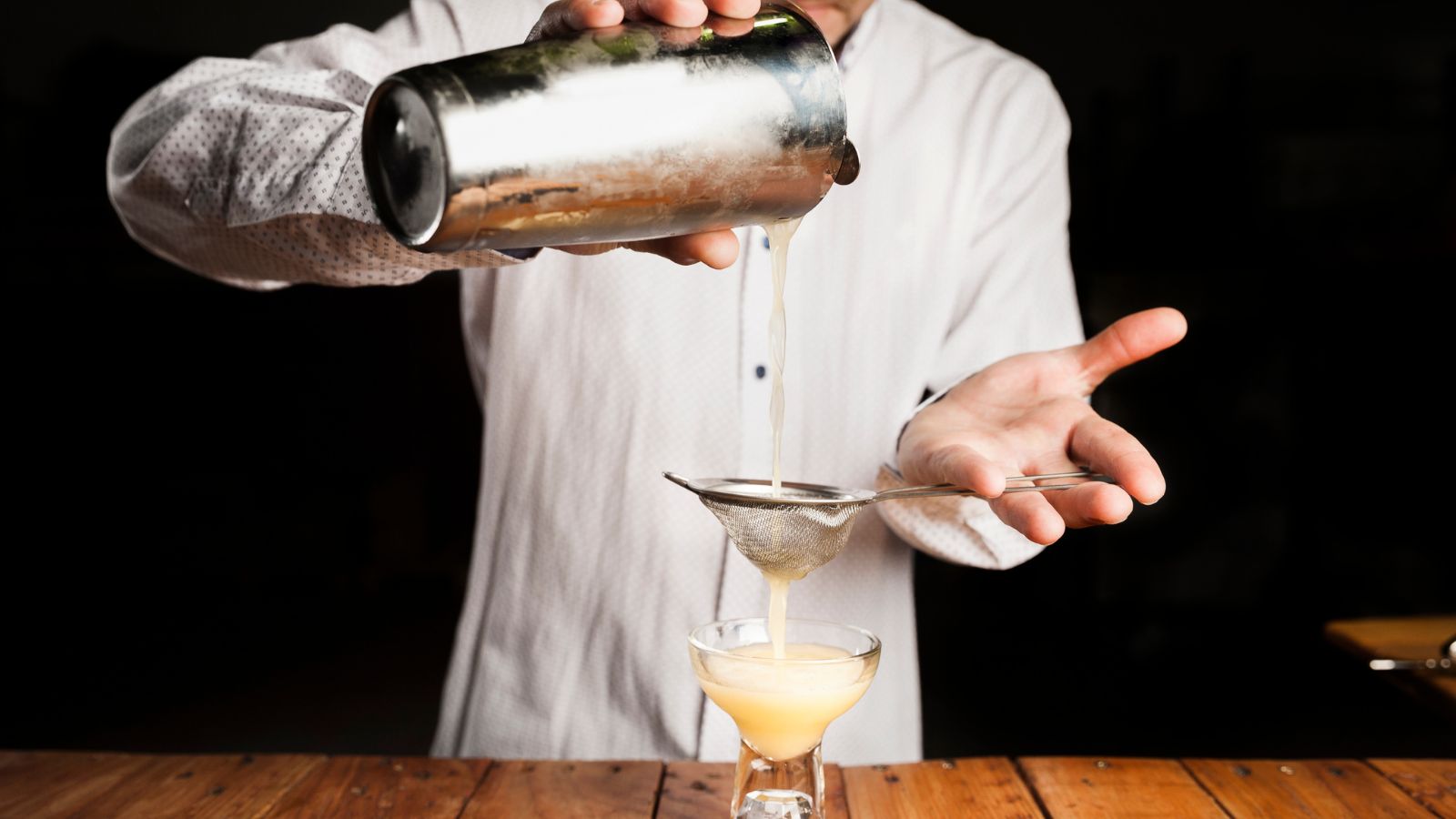
Put all ingredients into the shaker
Shake vigorously with plenty of ice (10–12 sec.)
Strain into a chilled glass
➡️ Clear, fresh, balanced.
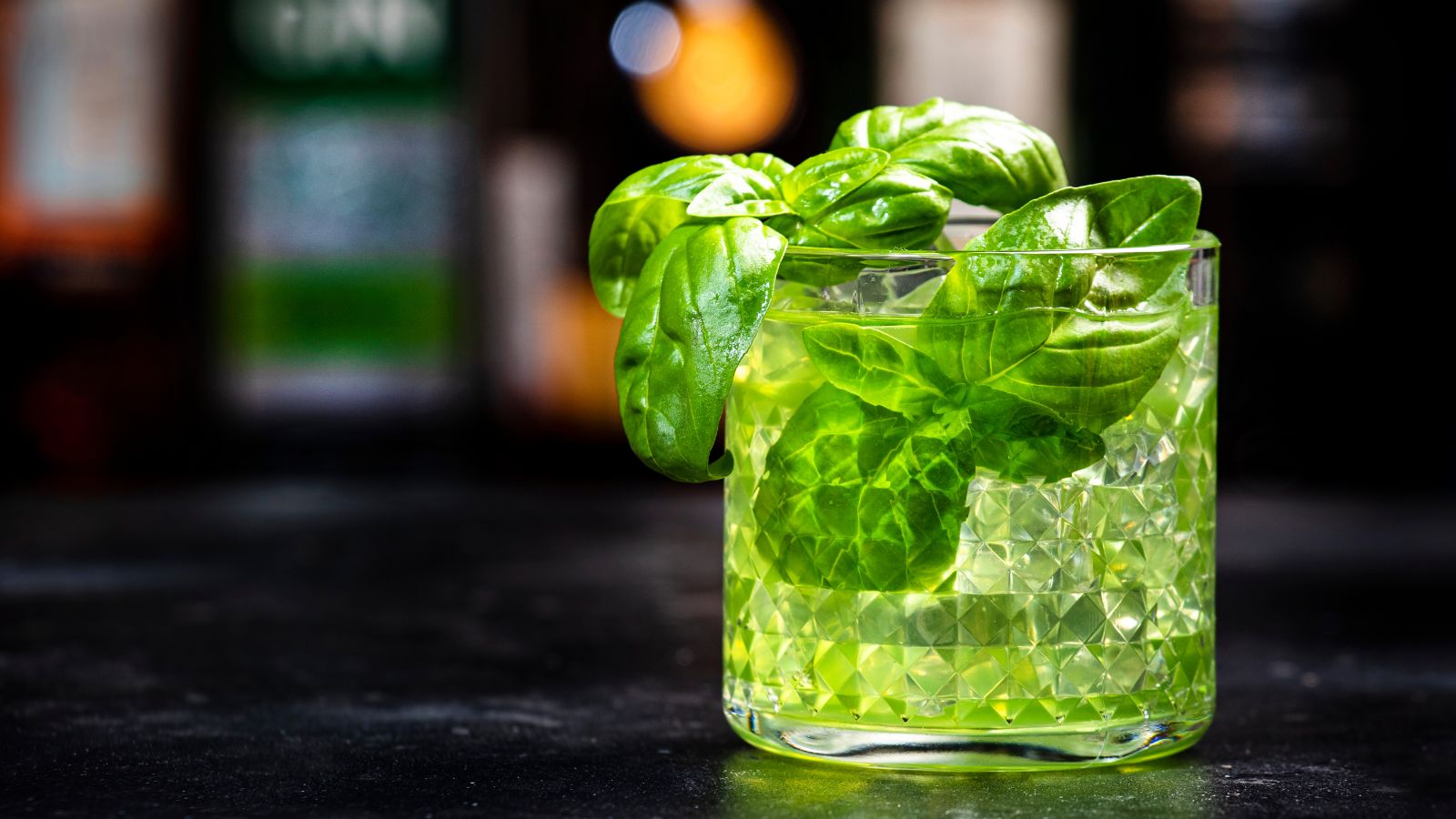
Gin Basil Smash – done right
Additionally:
6–8 Basil leaves
Important (Bartender Standard):
👉 Do not muddle the basil and do not hit it beforehand.
The basil leaves go directly with ice into the shaker and are shaken extremely vigorously.
👉 The ice cubes "hit" the basil. The stronger the shake, the:
greener the drink
more intense the aroma
cleaner the taste
Then strain finely.
➡️ Fresh, green, intense – without bitterness.
🥃 Vodka – neutral, perfect for low carb
Vodka brings no aromas, but structure, coldness and clarity.
Vodka Sour (clean & light)
5 cl Vodka
3 cl Lemon juice
2 cl Agave syrup (or other sugar alternative)
Ice
Preparation:
Shake vigorously, strain.
➡️ Ideal for low-carb drinks, because sweetness can be dosed very precisely.
🌴 Rum – soft, sweetish, needs freshness
Rum Sour
5 cl Rum
3 cl Lime juice
2 cl Sugar syrup
Ice
➡️ Classic, rounded, very approachable.
Make it softer: Additionally 2–4 cl juice (e.g., orange or pineapple).
🌾 Korn – underestimated, but perfect
Korn Sour
5 cl Korn
3 cl Lemon juice
2 cl Sugar syrup
Ice
➡️ Surprisingly soft and very drinkable.
🍐 Obstler & Fruit Brandies – less is more
Fruit Brandy Sour
4 cl Fruit brandy
3 cl Lemon juice
2 cl Sugar syrup
Ice
➡️ Less alcohol, more fragrance. This makes fruit brandy elegant instead of sharp.
🌿 Ramazzotti – balance herbs correctly
Ramazzotti Sour
5 cl Ramazzotti
3 cl Lemon juice
1–1.5 cl Sugar syrup
Ice
➡️ Herbal, fresh, not sticky.
🍸 Martini Bianco – sweet, floral, sensitive
Martini Bianco Sour
5 cl Martini Bianco
3 cl Lemon juice
0–1 cl Sugar syrup (optional)
Ice
➡️ Light, modern, very elegant.
☕ Coffee Liqueur – used correctly (Espresso Martini logic)
Coffee liqueur neat is almost always too sweet. The solution is structure.
Classic Espresso Drink
4 cl Vodka
4 cl Coffee liqueur
2 cl fresh Espresso
1 cl Sugar syrup
Preparation:
Put everything into the shaker
Shake vigorously with plenty of ice (foam!)
Strain into a chilled glass
➡️ Essentially an Espresso Martini – rounded, not sticky, full of flavor.
Most Important Takeaway from this Chapter
If a drink doesn’t taste good, it’s almost never a lack of alcohol.
Most of the time it’s a lack of balance.
Less sugar, less alcohol, better balance
Less sugar and less alcohol may initially sound like deprivation.
Like "light".
Like less enjoyment.
In practice, the opposite often happens. Drinks become clearer, more structured, and much more pleasant to drink when you understand where flavor truly originates.
1. Flavor does not come from quantity
A drink does not get better because there is more alcohol or more sweetness in the glass.
Too much alcohol:
masks flavors
tastes sharp
makes you tired
Too much sweetness:
makes drinks flat
loses tension
overwhelms fine nuances
Bartender thinking:
Not more of everything – but just enough.
2. Use sweetness purposefully – not reflexively
Sweetness is a tool, not a fix-all button.
If a drink does not taste round, it is often not due to too little sugar, but because of:
lack of acidity
too little dilution
incorrect temperature
👉 Before you add more sugar, first check:
Is the drink cold enough?
Is there enough ice in the glass?
Is there a lack of freshness?
Often that is enough.
3. Use sugar alternatives sensibly (Low Carb without pressure)
Especially with clear drinks, Low Carb works excellently when done properly.
Well suited:
Agave syrup (mild, round, easy to measure)
Xylitol syrup (for very consistent Low Carb)
Important:
Sugar alternatives are usually sweeter than classic syrup.
👉 Rule of thumb:
preferably start with 1.5–2 cl
adjust slowly
This keeps the drink balanced and doesn’t taste artificial.
4. Less alcohol can mean more flavor
A common mistake: "The drink is too weak."
In truth, it is often:
too unbalanced
too warm
or improperly diluted
When you reduce alcohol:
from 5 cl to 3–4 cl
with more ice
cleaner balance
flavors often seem clearer and more defined.
👉 Especially in sours, this creates more flow and less heaviness.
5. Dilution is more than ice
Dilution is often equated only with melting ice. That is too narrow a view.
Dilution occurs whenever strong components are balanced by liquid.
This can be:
ice
juice
soda or water
espresso (e.g., in an espresso martini)
Aha:
Dilution does not mean “watering down.” It means creating balance.
How to consciously dilute juice
If you add 2–4 cl of juice to a sour:
orange
apple
grapefruit
pineapple
the following happens:
acidity becomes softer
alcohol recedes
the drink becomes rounder
balance is achieved sooner
👉 This is not a shortcut, but a conscious style.
6. Clear style beats complexity
Low Carb and reduced alcohol work best with:
clear drinks
sours
highballs
drinks with lots of ice
Less suitable are:
very creamy liqueurs
extremely sweet ready-made products
Aha:
The clearer the drink, the less it needs.
7. Enjoyment remains enjoyment
It is not about reducing everything. It is about mixing more consciously.
If you understand:
how sweetness works
how alcohol carries
how ice and juice dilute
then you can:
use less
but taste more
And that is what makes the difference between “okay” and really good.
You think like a bartender (and no longer need recipes)
If you have read this far, everything is already there.
You no longer need long recipe lists.
No fancy syrups.
No new bottles.
What you need is a different mindset.
Bartenders don’t start with a recipe. They start with a question:
What do I have – and what do I want to make from it?
1. Think in building blocks, not in cocktails
A good drink almost always consists of the same elements:
Base – the spirit
Freshness – lemon, lime, juice
Balance – sweetness, dilution, ice
If you have these three points clear, you can make something meaningful out of almost any bottle.
Gin remains gin.
Rum remains rum.
But the framework decides whether it becomes a sharp drink or a smooth one.
2. Don't ask yourself: "What cocktail should I make?"
But rather: "What should it taste like?"
Do you want the drink:
fresh?
soft?
lightly bitter?
fruity?
clear and cool?
Only then do you decide:
more acidity
a little juice
less alcohol
different ice
Aha:
Flavor is not created by names, but by decisions.
3. Tasting is not a pro trick – it’s a must
Bartenders taste. Always.
Not much. A drop is enough.
too sour → minimal sweetness
too sweet → a few drops of acidity
too strong → more ice or dilution
👉 Those who do not taste leave the drink to chance.
4. Use what is available – consciously
You have experienced this in your courses for years:
The best Aha moments do not arise from new ingredients, but from new understanding.
Gin with lemon and ice can be great
Rum often just needs structure
Vodka lives from cold
Liqueurs almost always need acidity
Herbs need movement, not pressure
If you know this, your home bar suddenly makes sense.
5. Simplicity is not a compromise
A drink with:
3–4 ingredients
clean balance
good ice
outperforms almost any overloaded cocktail.
Not because it can do less. But because it is clearer.
6. The most important thought for the end
You don’t have to become a bartender to mix better drinks.
But if you think like a bartender,
you will:
waste less
buy less
drink better drinks
And that's exactly what it's about.
Not about perfection. But about enjoyment that feels light and still leaves an impression.
A quiet thought to take away
If you realize that this understanding is enjoyable for you, the combining, tasting, understanding – then it is no coincidence.
This is exactly where our cocktail courses come in. Not with recipes to memorize,
but with what you have just read:
Understand, feel, apply.
The rest happens in the glass.
Frequently Asked Questions About Mixing Spirits at Home (FAQ)
Which spirits are best for simple cocktails at home?
The easiest to mix are gin, vodka, rum, whiskey, grain spirit, and Martini Bianco.
The sour rule of thumb (spirit, acid, sweetness, ice) works without complicated ingredients.
What can I do with spirits that have been sitting in the cabinet for years?
Almost any spirit can be rebalanced with acid, sweetness, and ice.
Liqueurs, herbal spirits, or fruit brandies suddenly taste fresh and drinkable as a sour.
Is lime juice the same as limettensaft?
No.
Lime juice is sweetened, stabilized lime juice and often part of classic recipes.
Fresh lime juice is much more acidic and not interchangeable 1:1.
Why do cocktails at home often taste unbalanced?
The most common reasons are:
too little ice
incorrect mixing ratio
too much sweetness or alcohol
lack of dilution
It's not the ingredients that are the problem, but the balance.
How much ice really belongs in a cocktail?
More than you think.
Too little ice makes drinks warm and unbalanced.
Good ice ensures coldness, structure, and controlled dilution.
What is the most important rule of thumb for cocktails at home?
The sour rule of thumb:
5 cl base spirit – 3 cl citrus – 2 cl sweetness
It works with most spirits and is easily adjustable.
Can I make cocktails with less sugar or alcohol?
Yes – they often taste even better.
With a little less sweetness, more ice, and clear acidity, drinks become fresher and lighter.
How do I make cocktails low carb without sacrificing taste?
Best with clear spirits like vodka or gin and sugar alternatives like agave syrup.
It's important to dose the sweetness slowly and keep the balance in mind.
Do I need to buy many new ingredients for good cocktails?
No.
With the right understanding, you can make very good drinks from what is already available at home – without fancy syrups or specialty products.
Why is basil not muddled in the basil smash?
Basil goes directly with ice into the shaker and is shaken vigorously.
The ice cubes release the aromas cleanly without releasing bitter substances.
How do I learn to understand cocktails better instead of just following recipes?
By learning how sweetness, acidity, alcohol, and dilution interact.
This understanding is exactly what professional cocktail courses focus on.
Themen, die dich auch interessieren könnten
Jan 9, 2026

Dec 6, 2025

Feb 8, 2025

Dec 26, 2025

Oct 30, 2024
Dec 3, 2025
Nov 14, 2025

Nov 21, 2025

Sep 12, 2025

Nov 12, 2024

Jan 16, 2025

Dec 17, 2024

Nov 5, 2024

Apr 17, 2024

Dec 4, 2025

Aug 29, 2025

Oct 27, 2024

Sep 15, 2024

Jan 16, 2025

Dec 3, 2024

Oct 24, 2024
Dec 9, 2025

Dec 19, 2025

Dec 6, 2024

Nov 28, 2025

Jul 15, 2025
Oct 31, 2025

Dec 12, 2025
Oct 24, 2024

Dec 4, 2025
Nov 7, 2025

Jan 22, 2025

Apr 17, 2024

Oct 3, 2025
Oct 17, 2025

Jan 13, 2025
Oct 24, 2025

Oct 10, 2025

Nov 5, 2024
Nov 5, 2025

Oct 28, 2024

Oct 29, 2024

Oct 23, 2024
Dec 5, 2025

Feb 15, 2025

Oct 22, 2024

Oct 25, 2024
Dec 7, 2025

Oct 6, 2024

Oct 22, 2024

Oct 28, 2024

Sep 29, 2024

Apr 17, 2024

Feb 16, 2025

Jul 16, 2025
Dec 5, 2025

Feb 27, 2025

Sep 5, 2025
Dec 8, 2025

Sep 26, 2025
Sep 19, 2025

Aug 22, 2025